

The mystery of the spinning statuette
Several months ago, we noticed that one of our Middle Kingdom statuettes was spinning around imperceptibly slowly in its new case in our Egyptian Worlds gallery. We set up a time lapse camera to take one image every minute for a week. This is the result.
Several months ago, we noticed that one of our Middle Kingdom statuettes was spinning around imperceptibly slowly in its new case in our Egyptian Worlds gallery. We set up a time lapse camera to take one image every minute for a week. This is the result.

The cause may be subtle vibrations from footfall or traffic outside, but the statuette has been on a glass shelf in about the same place in the gallery for decades and has never moved before – and none of the other objects in the case move in any way. A mystery?
The video Here The mystery of the spinning statuette
Posted by Bilal Aslam
Egypt
officials have said they will make a formal request to Germany for the
return of the 3,400 year-old bust of fabled Queen Nefertiti, but Germany
said the bust will remain in Berlin.

State minister for antiquities Zahi Hawass said this week a letter would be sent to Germany to demand the return of the Nefertiti bust, nearly a century after it was uncovered on the banks of the Nile.
Read the full News Here

State minister for antiquities Zahi Hawass said this week a letter would be sent to Germany to demand the return of the Nefertiti bust, nearly a century after it was uncovered on the banks of the Nile.
Read the full News Here

On a sunny afternoon on Dec. 6, 1912, an Egyptian worker at a dig
along the banks of the Nile came across what may be the most striking
find in the history of Egyptology. Ludwig Borchardt, the German
archaeologist in charge of the excavation, scribbled excitedly in his
diary a century ago: “The tools were put aside, and the hands were now
used … It took a considerable amount of time until the whole piece was
completely freed from all the dirt and rubble.” What emerged was a
3,300-year-old limestone bust of an ancient queen, colored with a gypsum
lacquer. A flat-topped crown perched above a finely defined brow. Her
cheekbones were high, nose distinguished. A thin, elegant neck — some
now describe it “swanlike” — rose from the bust’s base. “We held the
most lively piece of Egyptian art in our hands,” wrote Borchardt.
The bust is of Nefertiti, queen of Egypt
and wife of Pharaoh Akhenaten, who reigned in the 14th century B.C. A
hundred years after Nefertiti’s bust was lifted out of the ground at
Amarna, some 480 km south of Cairo, it remains one of the most iconic
figures of Egyptian antiquity, far smaller than the pyramids or the
Sphinx, but no less globally resonant. The bust adorns souvenir schlock
throughout Egypt and history schoolbooks worldwide. When it went on
display at a museum in Berlin in the 1920s, it was almost immediately
held up as a symbol of universal, timeless beauty. That’s not
surprising. Nefertiti’s name means “the beautiful one has come.”
But she’s much more than a pretty face. The queen and the bust that
made her famous in our time are both fascinating stories — with endings
that are still shrouded in uncertainty. Little is known of Nefertiti’s
origins save that she was born outside the royal family, the daughter of
the pharaoh’s vizier. She married Amenhotep IV, who inherited a vast,
rich empire from his father Amenhotep III that stretched from the Nubian
wastes to the river lands of Syria. Theirs was a moment of relative stability, with trade, not conquest, filling Egypt’s coffers.
Yet Nefertiti and her husband were for centuries virtually wiped off
the historical record; it’s only once archaeologists in the early 20th
century started excavations of their capital complex at Amarna that they
loomed out of the dark of the past. The reason, it seems, was a move
taken by Nefertiti’s husband to abandon the cults of certain gods — and
the bloated, powerful priesthoods that surrounded them — in favor of
worship of just one abstracted figure: Aten, a god represented as a sun
disk. Amenhotep IV assumed the name Akhenaten, or “one devoted to Aten,”
and he and Nefertiti arguably became the world’s first monotheists.
There are other moments in history when a royal takes such a daring
ideological turn — Byzantine Emperor Julian forsook Christianity for
Greek polytheism and philosophy; Mogul Emperor Akbar embraced the din-e-ilahi,
a cosmological religion that melded Hinduism and Islam — but Akhenaten
stands out for seeming so uncharacteristically modern in such an ancient
moment. That modernity is reinforced by the outsize role played by
Nefertiti. Friezes, steles and inscriptions all make clear that she was
firmly at Akhenaten’s side, and sometimes even standing before him. In
one image found on blocks at the site of Hermopolis, Nefertiti is cast
in the classic role of a male conqueror, grabbing her enemies and
captives by the hair while smiting them with a mace.
Historians and archaeologists now puzzle over whether she ruled on in
the wake of her husband’s death. But evidence is spotty. Much of the
artwork and symbolism of their rule was erased by reactionary successors
who restored polytheistic worship to the court. Unlike many ancient
Egyptian royals, archaeologists have yet to identify their mummies,
though speculation has been rife in recent years.
Analysis by Rossella Lorenzi
Two possible pyramid complexes might have been found in Egypt, according to a Google Earth satellite imagery survey.
Located about 90 miles apart, the sites contain unusual grouping of mounds with intriguing features and orientations, said satellite archaeology researcher Angela Micol of Maiden, N.C.
One site in Upper Egypt, just 12 miles from the city of Abu Sidhum along the Nile, features four mounds each with a larger, triangular-shaped plateau.
The two larger mounds at this site are approximately 250 feet in width, with two smaller mounds approximately 100 feet in width.
NEWS: Egyptian Pyramids Found With NASA Satellite
The site complex is arranged in a very clear formation with the large mound extending a width of approximately 620 feet -- almost three times the size of the Great Pyramid.
"Upon closer examination of the formation, this mound appears to have a very flat top and a curiously symmetrical triangular shape that has been heavily eroded with time," Micol wrote in her website Google Earth Anomalies.
Intriguingly, when zooming in on the top of the triangular formation, two circular, 20-foot-wide features appear almost in the very center of the triangle.
 Full source: http://news.discovery.com/history/lost-egyptian-pyramids-found-120810.html
Two possible pyramid complexes might have been found in Egypt, according to a Google Earth satellite imagery survey.
Located about 90 miles apart, the sites contain unusual grouping of mounds with intriguing features and orientations, said satellite archaeology researcher Angela Micol of Maiden, N.C.
One site in Upper Egypt, just 12 miles from the city of Abu Sidhum along the Nile, features four mounds each with a larger, triangular-shaped plateau.
The two larger mounds at this site are approximately 250 feet in width, with two smaller mounds approximately 100 feet in width.
NEWS: Egyptian Pyramids Found With NASA Satellite
The site complex is arranged in a very clear formation with the large mound extending a width of approximately 620 feet -- almost three times the size of the Great Pyramid.
"Upon closer examination of the formation, this mound appears to have a very flat top and a curiously symmetrical triangular shape that has been heavily eroded with time," Micol wrote in her website Google Earth Anomalies.
Intriguingly, when zooming in on the top of the triangular formation, two circular, 20-foot-wide features appear almost in the very center of the triangle.

Science and Scholarship in Poland
In September, members of the Scientific Society of Ancient Egypt "KeMeT" at the University of Warsaw Łukasz Przewłocki and Ewa Biskupek will begin a scientific project aimed at finding and documenting selected archaeological sites depicted in the nineteenth century drawings and described in the reports of the first archaeologists. Comparing them with the current state can provide new information on pioneering research conducted more than 150 years ago.
At the moment, work is underway on searching, cataloguing and specifying, which monuments, primarily buildings, will be selected for detailed study.
"Figures we are taking into account originate from the first half of the nineteenth century, and their authors are the first European Egyptologists, including Jean-Francois Champollion, Karl Richard Lepsius, Ippolito Rosellini, and about 200 scientists and 160 illustrators, who participated in Napoleon’s Egypt expedition" - explained Łukasz Przewłocki. Bonaparte's expedition was the cause of the immense work Description de l'Egypte.
UCL Blogs (Katherine L Aitchison)
Anyone who knows anything about the horror genre will have heard stories of curses placed on tombs in Ancient Egypt to deter grave robbers and those who would plunder the graves of priests and pharaohs. But where do these stories come from and is there any truth behind them?
On 21 May Professor Roger Luckhurst of Birkbeck College presented the true story of a mummy’s curse to a packed Petrie Museum audience.
Or perhaps, I should say, he presented the truth behind the rumour as far as he could piece it together drawing from numerous different accounts. A little more convoluted as a turn of phrase, but much more accurate.
The mummy in question is, in fact, simply a coffin lid known as “The Unlucky Mummy”, or to give it its official name: British Museum object-22542.
This lid, once part of the last resting place of an unknown woman from a high-ranking family in the priesthood, was donated to the museum by the sister of Arthur F. Wheeler, the man who was believed to have brought it back from Egypt.
But the story surrounding the lid is full of intrigue, featuring a number of shooting accidents and suspicious deaths as well as a lost fortune and a picture of a ghostly face.

Carol Downer has put together a brilliant Coptic trail for the Petrie Museum, sponsored by the British Egyptian Society. It is accompanied by a history of Coptic Egypt, which is most useful. I'm looking forward to following the trail.
equities.com
The west coast premiere of Cleopatra: The Search for the Last Queen of Egypt, featuring the largest collection of its kind ever assembled, opened today at the California Science Center. More than 150 priceless Egyptian artifacts illuminating the life of Cleopatra VII, one of the most provocative and powerful women in history, will be on view including colossal statues, jewelry, coins, and handwritten notes from her lost palace in Alexandria.
Cleopatra: The Search for the Last Queen of Egypt immerses visitors in the experience of two present-day searches, on both land and sea, for the elusive queen which extend from the sands of Egypt to the depths of the Bay of Aboukir near Alexandria. The artifacts weigh in at about 30 tons in total, including two 16-foot granite statues of a Ptolemaic king and queen from the 4th – 3rd centuries B.C.
"We are thrilled to host the west coast premiere of this extraordinary exhibition," said Jeffrey Rudolph, president and CEO of the California Science Center.
IMPACT Radiological Mummy Database Project
Thanks to Dr Andrew Wade for letting me know that there is a project collating mummy scans from around the world. The IMPACT Radiological Mummy Database Project (impactdb.uwo.ca) at the University of Western Ontario is curently under way and is expected to go live online this summer.
The IMPACT Radiological Mummy Database is a large-scale, multi-institutional collaborative research project devoted to the scientific study of mummified remains, and the mummification traditions that produced them, through non-destructive medical imaging technologies.
IMPACT focuses on the body, made artifact through cultural or natural intervention, in bioarchaeology, epidemiology, and social archaeology studies of past human societies and their genetic and cultural descendents.

in the ancient world); and the Catacombs of Kom el Shoqafa, one of the Seven Wonders of the Middle Ages.

Situated largely on man-made land, the city was founded on a low sandy strip separating the Mediterranean from Lake Al-Manzilah. Lying at the junction of Africa & Asia, it is a famous and vital sea route between east & west.
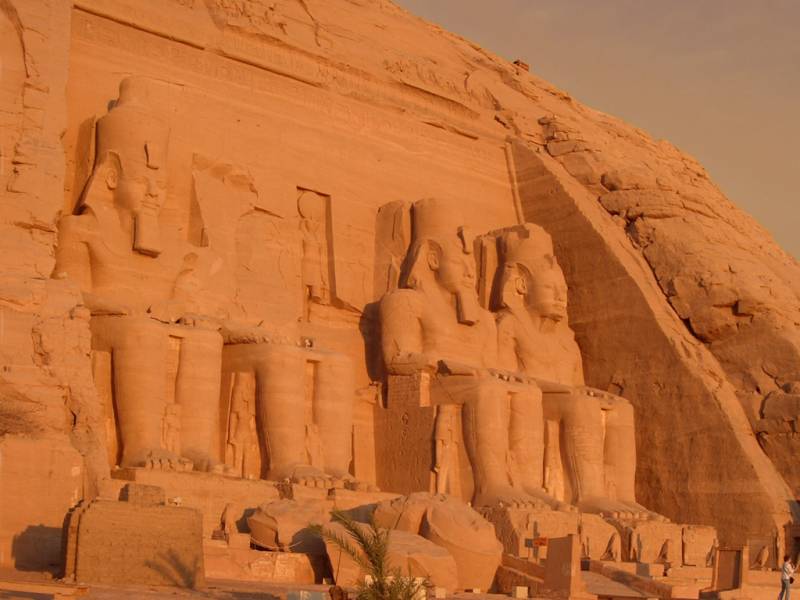
One of the best places for a spectacular sunset is the terrace of the Old Cataract Hotel (minimum charge of LE85). The near Elephantine Island is one of the most ancient sites in Egypt. This is probably due to its location at the first .The Great Sun Temple, Abu Simbel The Great Sun Temple, Abu Simbel .The Great Sun Temple, Abu Simbel Four colossal 20-meter statues decorate the facade of the temple. All of them represent Ramesses II, seated on a throne and wearing the double crown of Upper and Lower Egypt.
cataract of the Nile, which provided a natural boundary between Egypt and Nubia. Staying at the Old Cataract would have overstretched my budget so I went for something (a lot) cheaper: I stayed at the Keylany Hotel (LE 30 B&B) which was a bit shabby but nonetheless good value-for-money and centrally located.
Temple of Isis, Philae Temple of Isis, Philae
Temple of Isis, Philae The Temple of Isis was built on an island in the Nile. It was the centre of the cult of the goddess Isis and her connection with Osiris and Horus during the Ptolemaic period
soft orange. Inside the temple the walls are decorated with dramatic reliefs of Ramses' II campaigns. Further, there are eight lateral chambers, each one crudely cut into the rock and decorated with painted offering scenes. The nearby Hathor temple of Queen Nefertari features six colossal statues of Ramses II and Nefertari, each one nearly 10m tall. Again, there are a number of impressive reliefs inside the temple.
I had already spent nearly 2 hours at the temples when the bus convoy arrived and the tour groups invaded the temples. By then, I had already seen everything exciting so I was happy to return to my hotel where I had breakfast on the banks of Lake Nasser. I left Abu Simbel at 9am on one of the tourist convoy buses and stopped at Philae on the way back to Aswan.

The ancient Egyptians built a beautiful temple for the Goddess Isis on Philae island. In order to get there I bought a ticket (LE40) and boarded one of the motorboats (LE4) which landed at the southern end of the Temple of Isis, PhilaeTemple of Isis, Philae Temple of Isis, PhilaeStylish plant columns in the temple's forecourt island. It were just a few steps from the jetty to the colonnades lining both sides of the Courtyard, leading to the First Pylon of the island's main temple. In fact, the Temple of Isisis one of the greatest temples in Egypt. It occupies about a quarter of Philae island and features huge complete pylons with beautiful scenes. The construction began during the reign of King Ptolemy II around 250BC. The second pylon leads to the Hypostyle Hall which is rather small compared to some of the other temples from this period. A series of three vestibules lead to the central sanctuary and its chambers on either side have entrances to the crypts. The Isis sanctuary still contains a pedestal where the sacred barque used in the processions and festivals of the goddess would have rested.

Kom Ombo
The next day, I visited Kom Ombo and Edfu temple whilst travelling back from Aswan to Luxor on a minibus (LE85). The bus left Aswan at 8am as part of the daily tourist bus convoy. The first stop was at Kom Ombo, some 50km north of Aswan. Kom Ombo’s Ptolemaic Temple of Haroeris and Sobek (LE25) stands on The Great Sun Temple, Abu SimbelThe Great Sun Temple, Abu Simbel The Great Sun Temple, Abu SimbelThe statue to the left of the entrance was damaged in an earthquake in 27 BC, leaving only the lower part of the statue still intact. The head and torso can still be seen at the statue's feet. the banks of the blue waters of the river Nile. This particular temple was built as a double temple, dedicated to Sobek, the crocodile headed god, and to Haroeris, medicine god. Unfortunately much of the temple has been destroyed by the Nile, earthquakes - and by later builders who used the temple as a quarry. However, main parts of the impressive Hypostyle Hall are still intact and in fact some traces of the original paint are still visible. After having exploring the temple for approximately one hour, we met at the minibus and continued north towards Luxor.

Edfu
We stopped another 50km further down the Nile at Edfu's Horus Temple (LE40), dedicated to the falcon god Horus. Most of the temple had been buried in sand for centuries and thus preserved before it was finally excavated in the 1860s. Today Edfu is nearly intact. The hieroglyphics and reliefs on the temple walls include the myth of the struggle between Horus and Seth. It is the second largest temple in Egypt and was built in the Ptolemaic period between 237 and 57 BC. The Temple has a pylon that is considered the highest among surviving temples in Egypt today. The Great Sun Temple, Abu SimbelThe Great Sun Temple, Abu Simbel The Great Sun Temple, Abu SimbelThe walls inside the Hypostyle Hall crawl with scenes from Ramesses' II campaigns It is 36m high and decorated with typical scenes of the Pharaoh in battle with his enemies. Within the pylons is the colonnade courtyard which leads into the Hypostyle Hall. The roof of the latter is still intact, supported by 12 columns. At the end of the Temple is the sanctuary, which includes a niche of grey granite where a statue of the God is supposed to be placed. We met back at the minibus at the pre-arranged time and continued to Luxor where we arrived at 1pm, some 5 hours after we had left Aswan. The journey was twice as expensive as the train however it offered an ideal opportunity to visit the temples of Edfu and Kombo on my way back to Luxor.
| The Sheraton Cairo Hotel |
Overview
See Egypt in a new way at the Sheraton Cairo Hotel. Sitting on the west bank of the River Nile in unique adjoining towers, the Sheraton Cairo Hotel proudly stands tall as one of Cairo's greatest landmarks. the Sheraton Cairo Hotel places you in the middle of it all. Try your luck at Blackjack or the slots in the dazzling casino or take a short walk to the Cairo Opera House, Egyptian Museum, or Cairo shopping centers. The Pyramids of Giza are just 20 minutes away. Whether you traveled to Cairo by train (the Sheraton Cairo Hotel is 15 minutes from the railway station) or plane (the Sheraton Cairo Hotel is 30 minutes from Cairo International Airport), the Sheraton Cairo Hotel friendly staff will greet you with a warm smile and help you make the most of your stay. Find magnificent views of the city or the River Nile from the Sheraton Cairo Hotel 340 deluxe rooms, including 42 suites. Amazingly spacious, our deluxe rooms offer 100% Egyptian cotton linen for your added comfort. Enjoy a stay you will never forget at the Sheraton Cairo Hotel.
Entertainment:
* Gaming Casino
* DVD Player (available in Deluxe Rooms and Suites only)
* Satellite Channels
Bed Features:
* Cribs (Upon Request)
Bathroom:
* Deluxe Bath Amenities
* Signature Bath Amenities
* Bathrobes
* Hairdryer
Dining:
* Mini Bar
* 24-Hour Room Service
Room Features:
* Connecting Rooms Available
* Executive Level Rooms Available
* Suites Available
* City View Room
* Non-Smoking Room
* Nile View Room
* Balcony
Room Amenities & Services:
* Free Newspaper
* Fresh Flowers
* Video Check-Out
* Iron/Ironing Board
* Turndown Service
* In-Room Safe
* Air-Conditioned Room
* Radio/Alarm Clock
Internet Access:
* High Speed Internet Access in Guest Rooms by Request USD 25 per day
Some of the amenities above may not be available in all rooms. Fees on certain amenities/services may apply.
| Guest Rooms |
Local Area
Cairo is a charming city that throbs with life and endless sightseeing options. The magical River Nile flows through the heart of the city. The great Pyramids have intrigued and puzzled visitors for centuries. And the Egyptian museum is often referred to as one of the most important museums in the world.
View Local Area Map
Arts & Culture:
* Egyptian Museum 2.0 km/1.2 miles
* Coptic Museum & St. Sirgus Church 5.0 km/3.1 miles
* Islamic Museum 6.0 km/3.7 miles
* The Sound and Light Show 12.0 km/7.5 miles
Community:
* MISR International 2.0 km/1.2 miles
* El Orouba School 3.0 km/1.9 miles
* El Horeya School 3.0 km/1.9 miles
* Citadel and Mohamed Ali Mosque 4.0 km/2.5 miles
* Cairo International Conference Center 20.0 km/12.4 miles
Corporate Offices:
* Cairo Barclays Bank 2.0 km/1.2 miles
* American Chamber of Commerce 2.0 km/1.2 miles
* Arab International Bank 3.0 km/1.9 miles
* Arab African International Bank 3.0 km/1.9 miles
* Aid Offices 3.0 km/1.9 miles
* Central Bank of Egypt 4.0 km/2.5 miles
* Investment Organization 4.0 km/2.5 miles
Golf;
* Millbrook Public Golf Course 2.0 km/1.2 miles
Government Offices:
* Russian Federation Embassy 1.0 km/0.6 miles
* American Embassy 3.0 km/1.9 miles
Local Attractions:
* Cairo Opera House 1.0 km/0.6 miles
* Cairo Tower 2.0 km/1.2 miles
* Khan El Khalily "The Bazaar" 3.0 km/1.9 miles
* Gezirah Sporting Club 6.0 km/3.7 miles
* The Pyramids and Sphinx 12.0 km/7.5 miles
* Saqqara and Memphis 12.0 km/7.5 miles
Features & Activities
The exclusive and luxurious atmosphere of The Sheraton Cairo Hotel unique Tower's Lounge pampers guests with snacks and refreshments all day in a cozy and elegant setting. Additional services include a fully equipped Business Center, 24-hour limo service, and a beauty salon. Recreational facilities are endless. Xanadu, The Sheraton Cairo Hotel health club is the best place to work out and enjoy The Sheraton Cairo Hotel rejuvenating Spa facilities. Enjoy a dazzling day by "Le Mirage" our outdoor swimming pool. Have a delicious meal. Enjoy the hot sunny days. Pamper yourself. Relax. Unwind.
The exclusive and luxurious atmosphere of The Sheraton Cairo Hotel unique Tower's Lounge pampers guests with snacks and refreshments all day in a cozy and elegant setting. Additional services include a fully equipped Business Center, 24-hour limo service, and a beauty salon. Recreational facilities are endless. Xanadu, The Sheraton Cairo Hotel health club is the best place to work out and enjoy The Sheraton Cairo Hotel rejuvenating Spa facilities. Enjoy a dazzling day by "Le Mirage" our outdoor swimming pool. Have a delicious meal. Enjoy the hot sunny days. Pamper yourself. Relax. Unwind.
Shopping
* Jewelry Shop
* Shopping Arcade in Hotel
Transportation
* Pay Parking Facilities
* Car Rental Service
* Limousine Service
Guest Services
* Airline Desk
* 24-Hour Front Desk
* Barber/Beauty Salon
* Medical Services Available
* Laundry/Valet Service
* 24-Hour Concierge Service
* Safe Deposit Boxes
* Dry Cleaning Service
* Wheelchair Access
* Luggage Storage
Business Services
* Link@Sheraton experienced with Microsoft
* Business Center
* Translation Services
Recreation & Entertainment
* Outdoor Pool
* Whirlpool/Hot Tub (Fitness Facility)
* Fitness Center
* Spa Facilities
* Outdoor Children's Pool
* Gaming Casino
* Steam Bath/Room
* Massage Treatments
Internet Access
* High Speed Internet Access in Guest Rooms by Request USD 25 per day
* Internet Service Provided in Business Center USD 25 per day
* Wireless High Speed Internet Access in Public Areas USD 25 per day
* Wireless High Speed Internet Access in Lobby USD 25 per day
Some of the services and facilities above may not be available on a 24-hour basis or without advance request. Fees on certain facilities/services may apply.
Dining
While spending a sunny day by the pool, you can also enjoy a refreshing drink and a mouth-watering snack from The Sheraton Cairo Hotel Pool Bar. And when night falls, your dining options open even more. Aladdin, The Sheraton Cairo Hotel Lebanese restaurant serves delicious oriental dishes. Sapporo Teppanyaki, boasts the city's best sushi and teppanyaki.
Restaurants & Lounges
Stiletto Lounge
| Cuisine: | Bar Menu |
| hours: | 7:00 PM - 4:00 AM |
Z Pub
| Cuisine: | Beverages |
| hours: | 12:00 PM - 12:00 AM |
| Atmosphere: | Pub |
Tea Garden

| Cuisine: | American |
| hours: | 24 Hours |
| Atmosphere: | Live Entertainment |
| Phone: | (20)(2) 33369700 |
Cafe Complet
| Cuisine: | Deli |
| hours: | 8:00 AM - 2:00 AM |
| Atmosphere: | Casual |
| Phone: | (20)(2) 33369700 |
Arrous El Nil
| Cuisine: | International |
| hours: | 6:00 AM - 12:00 AM |
| Atmosphere: | All Day Dining |
| Phone: | (20)(2) 33369700 |
Sapporo Teppanyaki

| Cuisine: | Japanese |
| hours: | 12:00 PM - 12:00 AM |
| Phone: | (20)(2) 33369700 |
Aladin

| Cuisine: | Oriental |
| hours: | 12:00 PM - 12:00 AM |
| Atmosphere: | Live Entertainment |
| Phone: | (20)(2) 33369700 |
El Mawardy

| Cuisine: | Oriental |
| hours: | 12:00 PM - 12:00 AM |
| Phone: | (20)(2) 33369700 |
Meetings & Events
The Sheraton Cairo Hotel 'll help you plan a great event in a great space.| Number of Guest Rooms: | 340 |
| Number of Meeting Spaces: | 9 |
| Largest Meeting Space: | 5,442 sq. ft. (505.58 sq.m) |
The Sheraton Cairo Hotel Features
- High Speed Internet Access Available in Meeting/Event Facilities
- Projector
- Meeting and Event Facilities
- Audio Visual Equipment
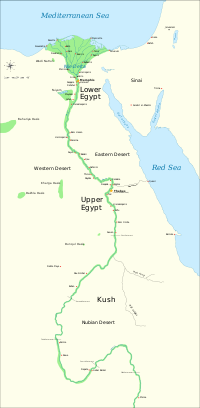 |
| Lower Egypt (al-Diltā) |
Lower Egypt (Arabic: الدلتا al-Diltā) is the northern-most section of

Characterized by Egypt in the atmosphere of a mild summer and winter, in which a visitor spend interesting times in the summer in beaches, extending for a distance of 1181 kilometers along the northern coast of the Mediterranean Sea from Salloum to Rafah, and Suez in the east to the far borders the south-eastern Red Sea length up to 1085 km. Abound in this region is particularly beautiful coral reefs and marine organisms colorful and diverse.
In the north lies Alexandria, the bride of the Mediterranean Sea, northwest of Delta, 230 kilometers from Cairo road agricultural and 225 miles along the desert road, and enjoy the Alexandria, a large number of sandy beaches, charming, including a beach, "the world" and "Park" and "Mandara" and "Miami" and "Sidi Bishr" and "Cleopatra", all located along the Corniche, while west of the city embraced the beach, "Ajami" The east coast of "Abu Qir," as well as had been left untouched city of gardens and parks, great.
There is a beach "table," a soft white sand and clear water is quiet. And protect this beach a series of rocks stretching along the coast. Matrouh beach and just about 290 kilometers west of Alexandria, about 524 kilometers from Cairo.
At a distance of 212 miles from Cairo there is a beach, "Nile Delta", characterized by a calm and healthy atmosphere dry, because of some sand dunes, which absorbs moisture, and is available in this resort the various services needed by tourists, the beginning of electricity and the end of the health services and leisure, as well as distinguish moderate prices . The Port is the main sea routes the task of East and West, have increased the importance of this city, located 220 kilometers from Cairo, after its transformation into a free zone.
The trip to the area of "beautiful" at a distance of 12 kilometers west of Port Said, of the joys that attracts many to this area, where you can practice sport fishing, sunset cruise or fun in the port, watching the convoys of vessels transiting the Suez Canal. And on the eastern shore of the canal lies the suburb of "Port Fouad," a quiet modern city planning, and lush parks, chalets, tourist villages, is also available, where restaurants, hotels and clubs. In addition, Port Said is famous for its markets business which hosts visitors from Egypt and abroad.
The beach tourism and leisure tourism one of the main types of tourism activities that are found in Egypt, which Aaada attract lots of tourists from around the world


